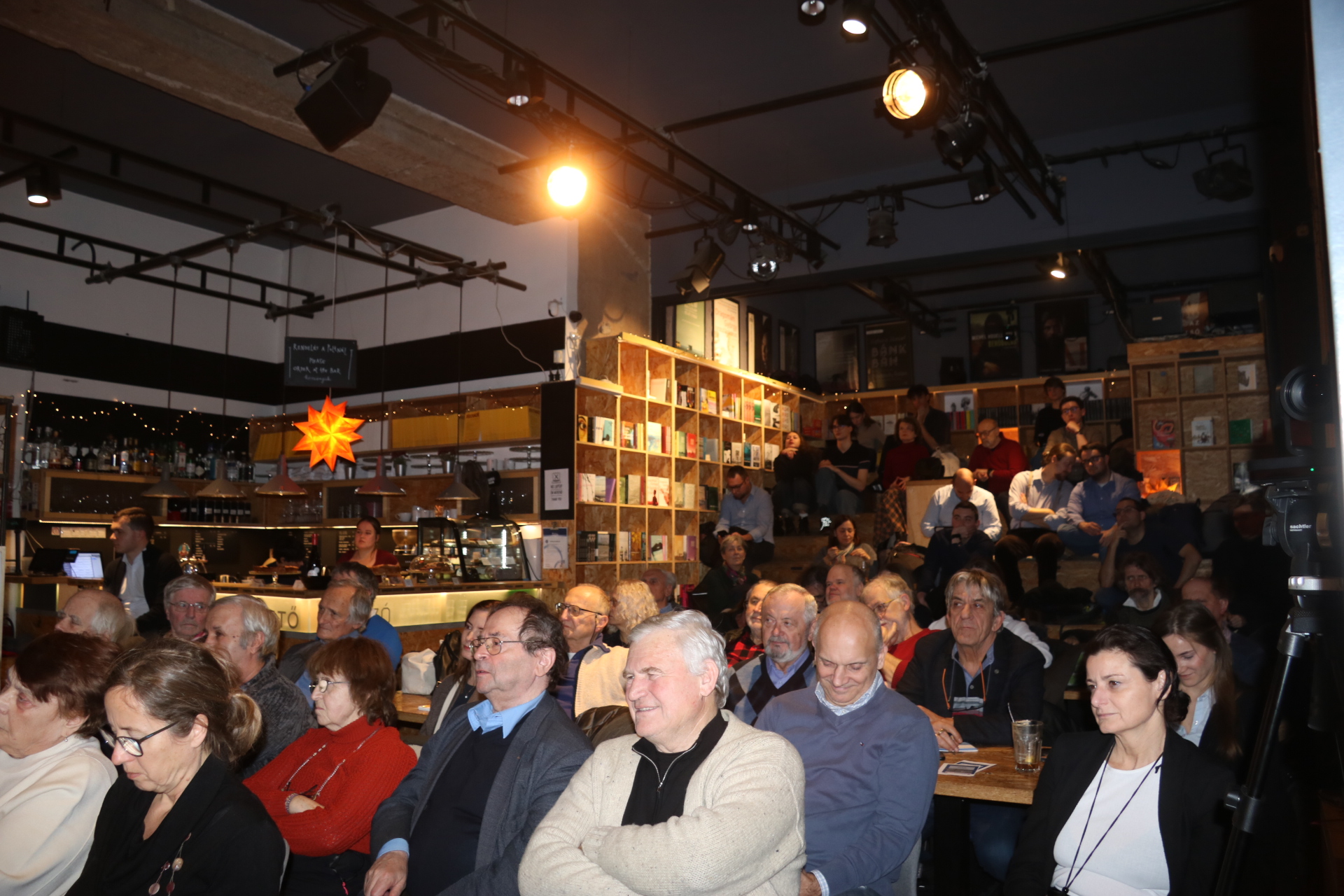
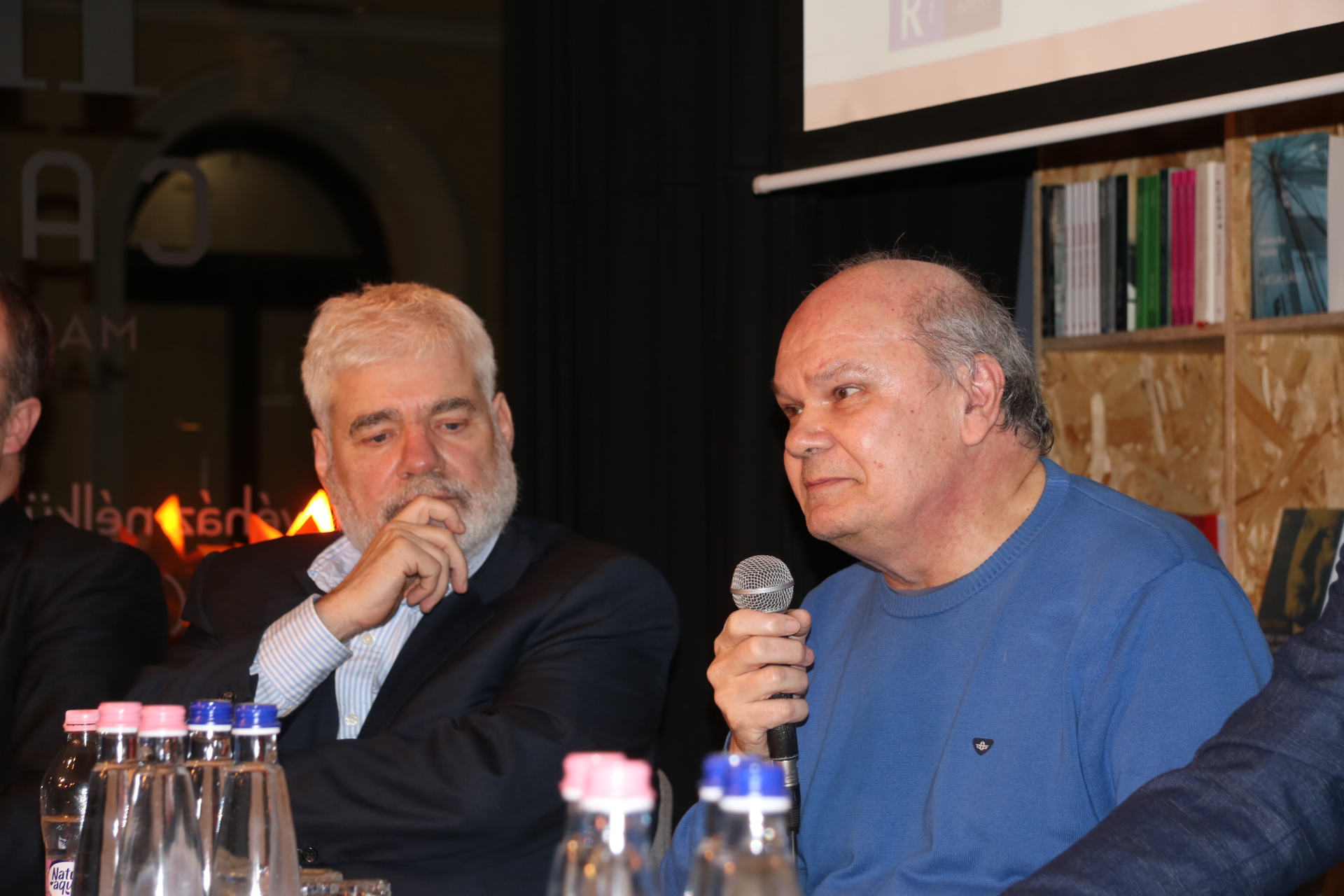
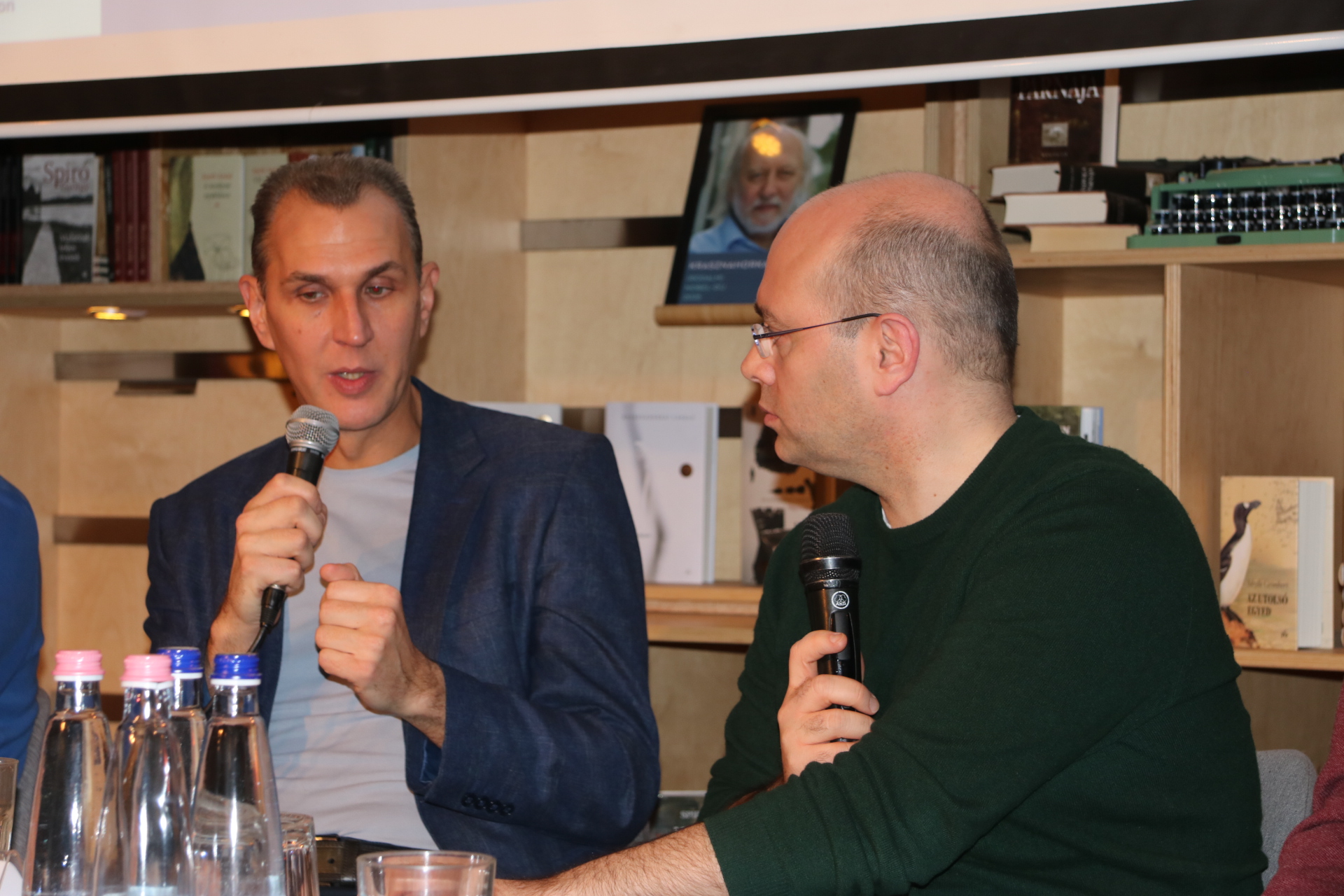
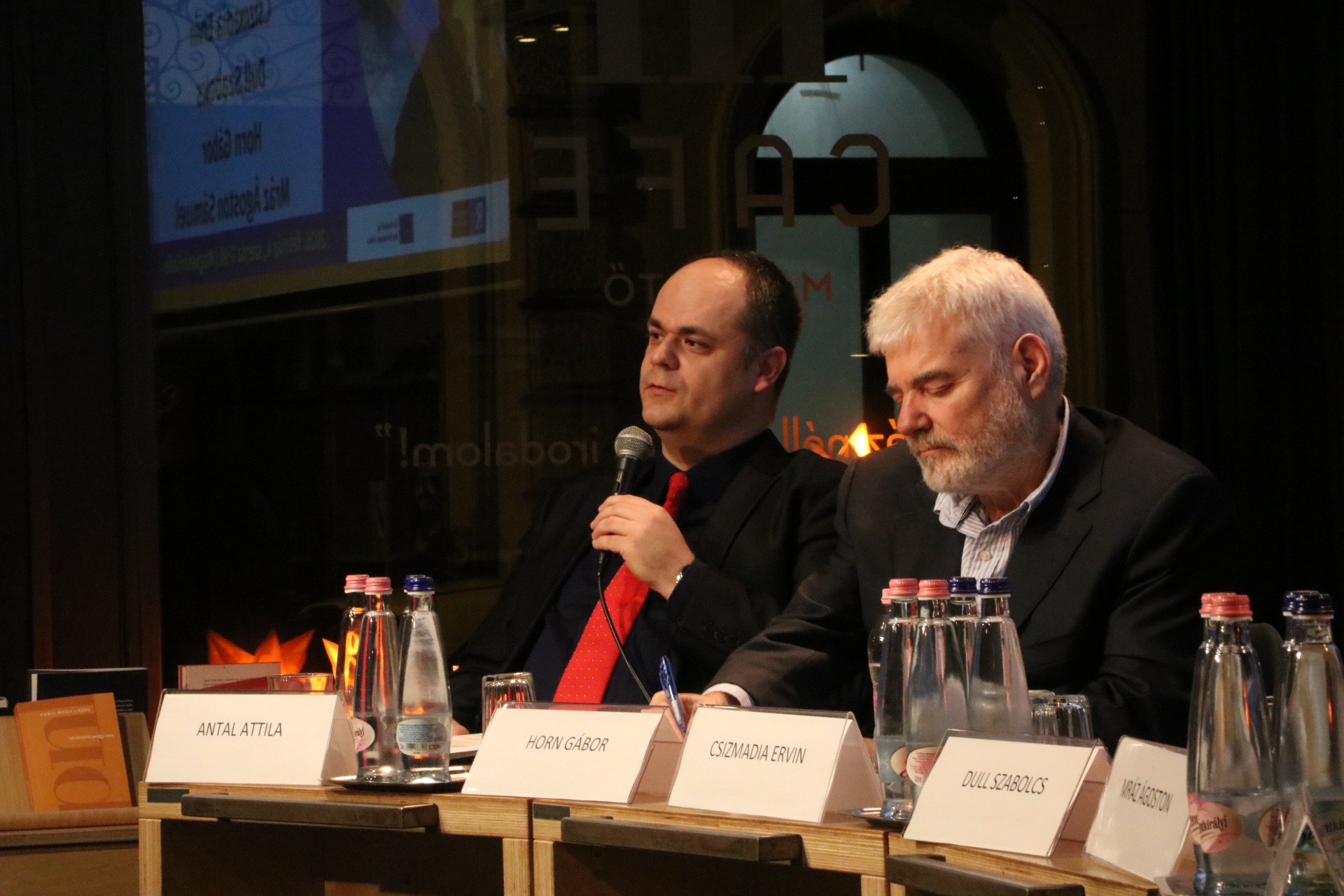
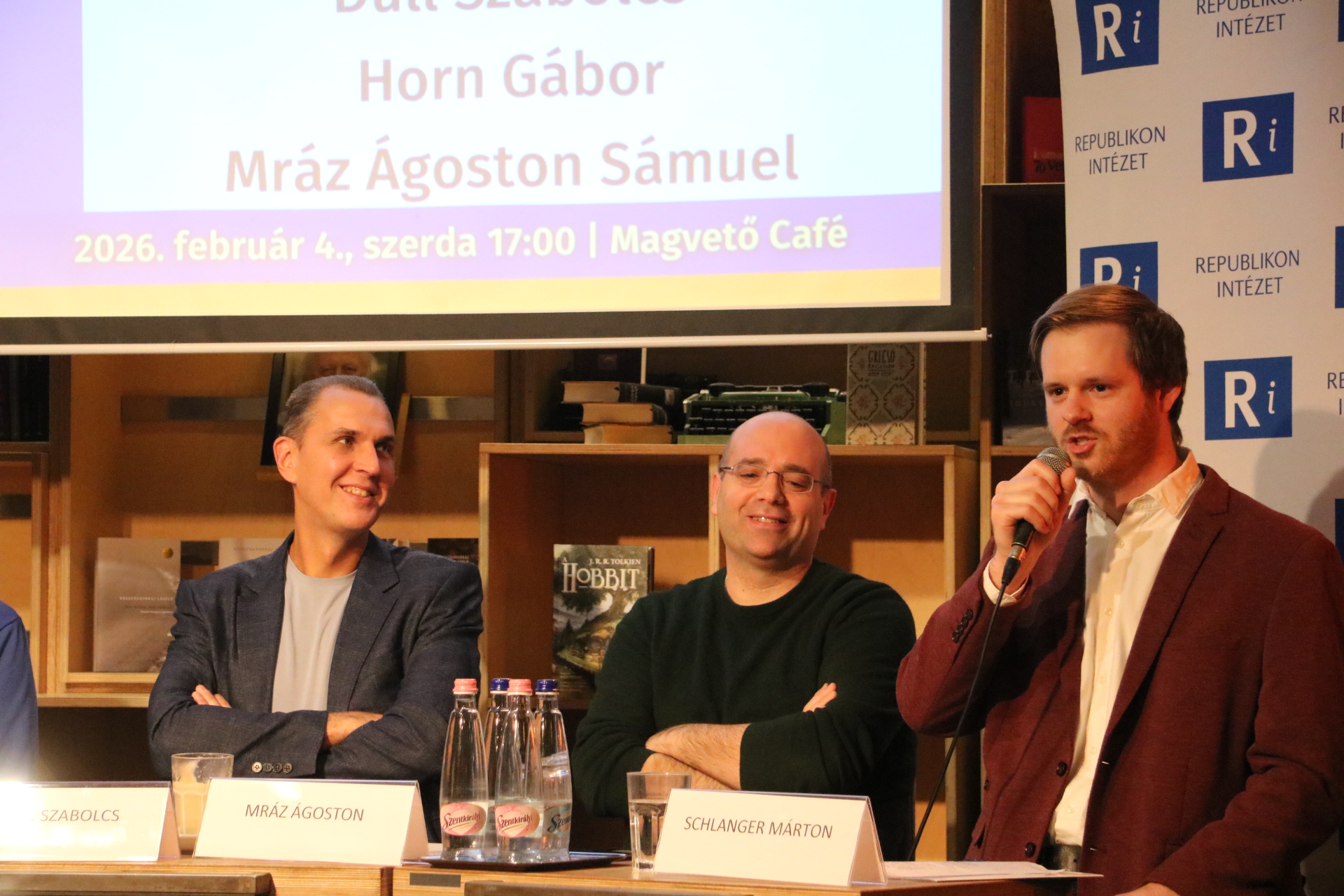
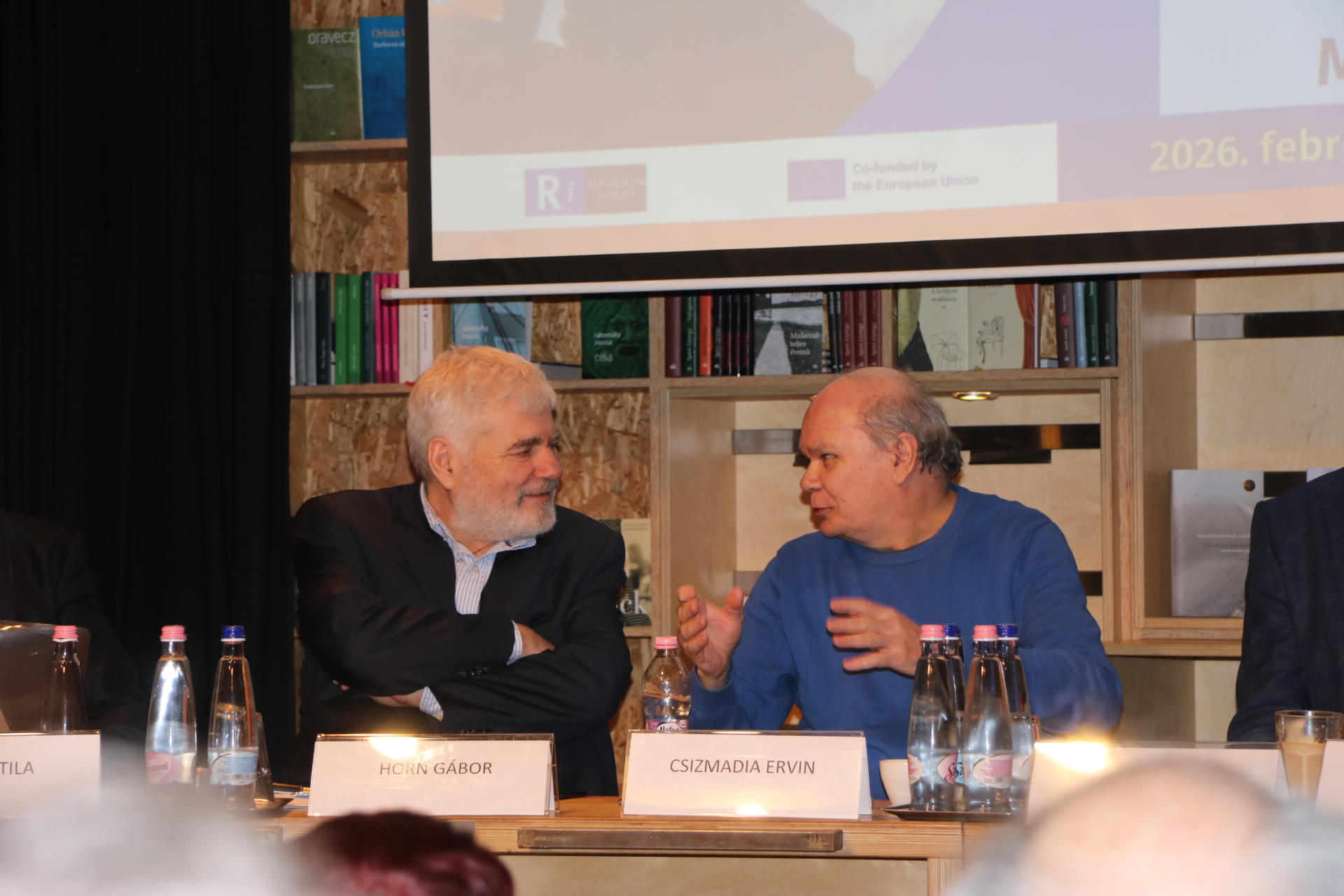
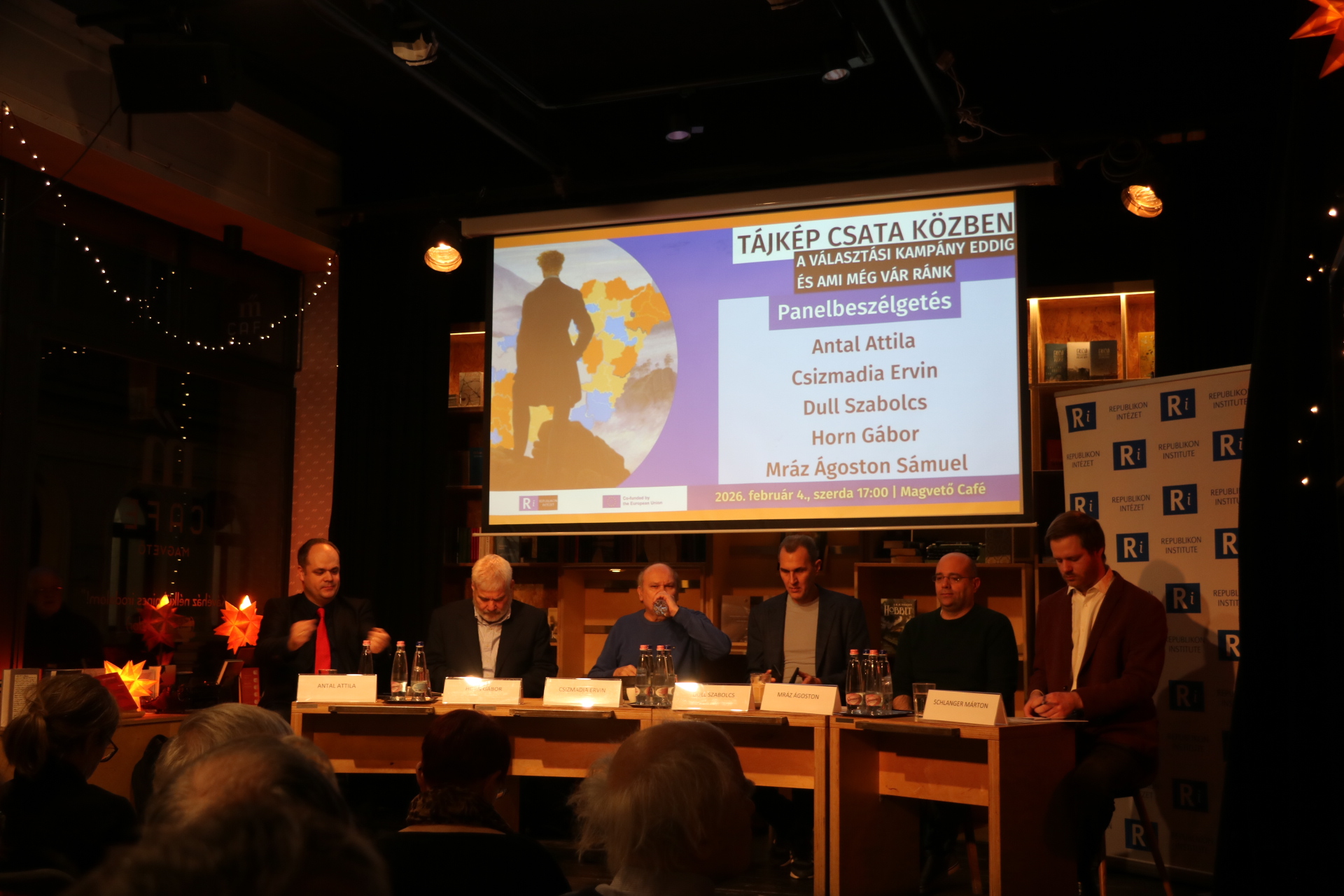
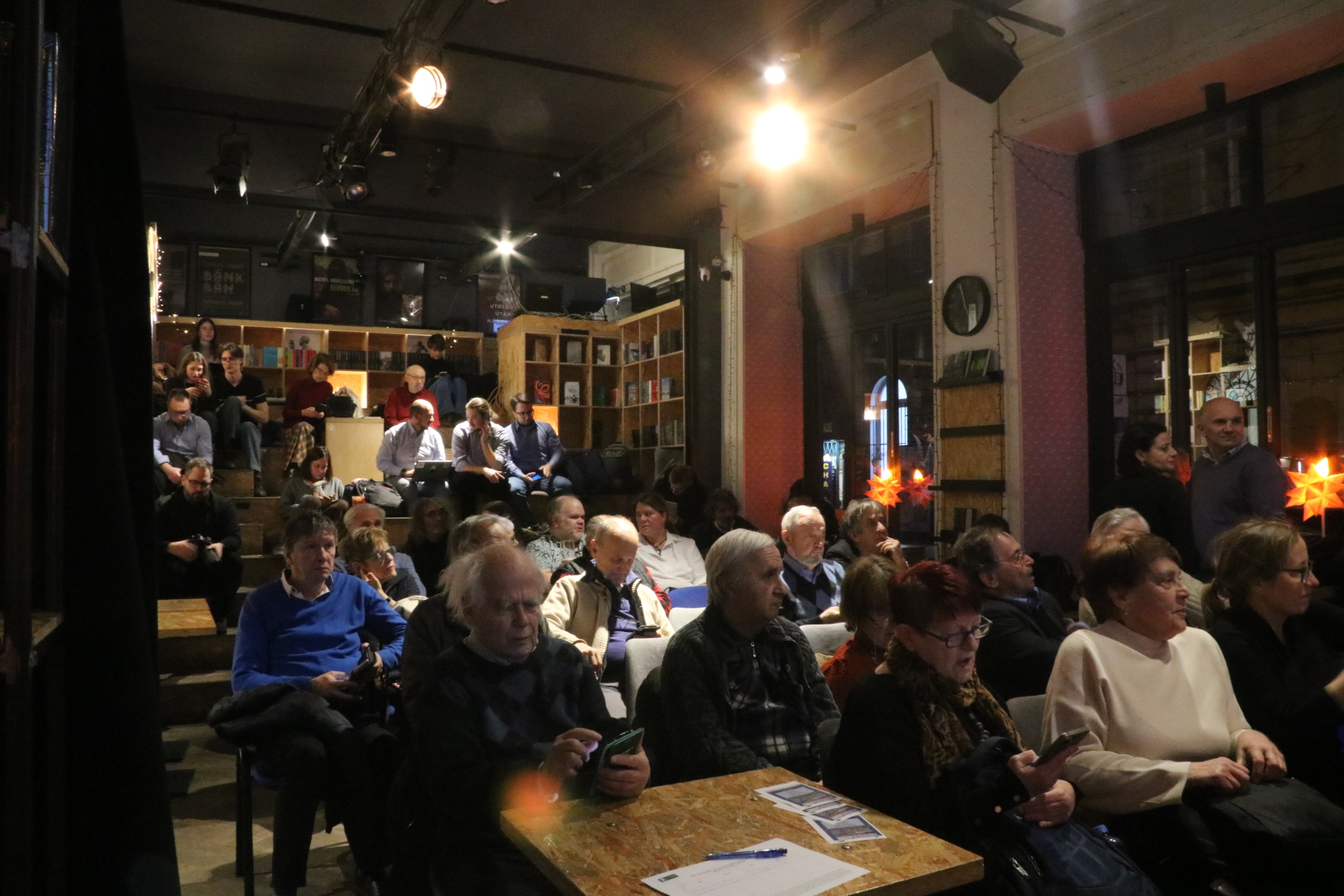
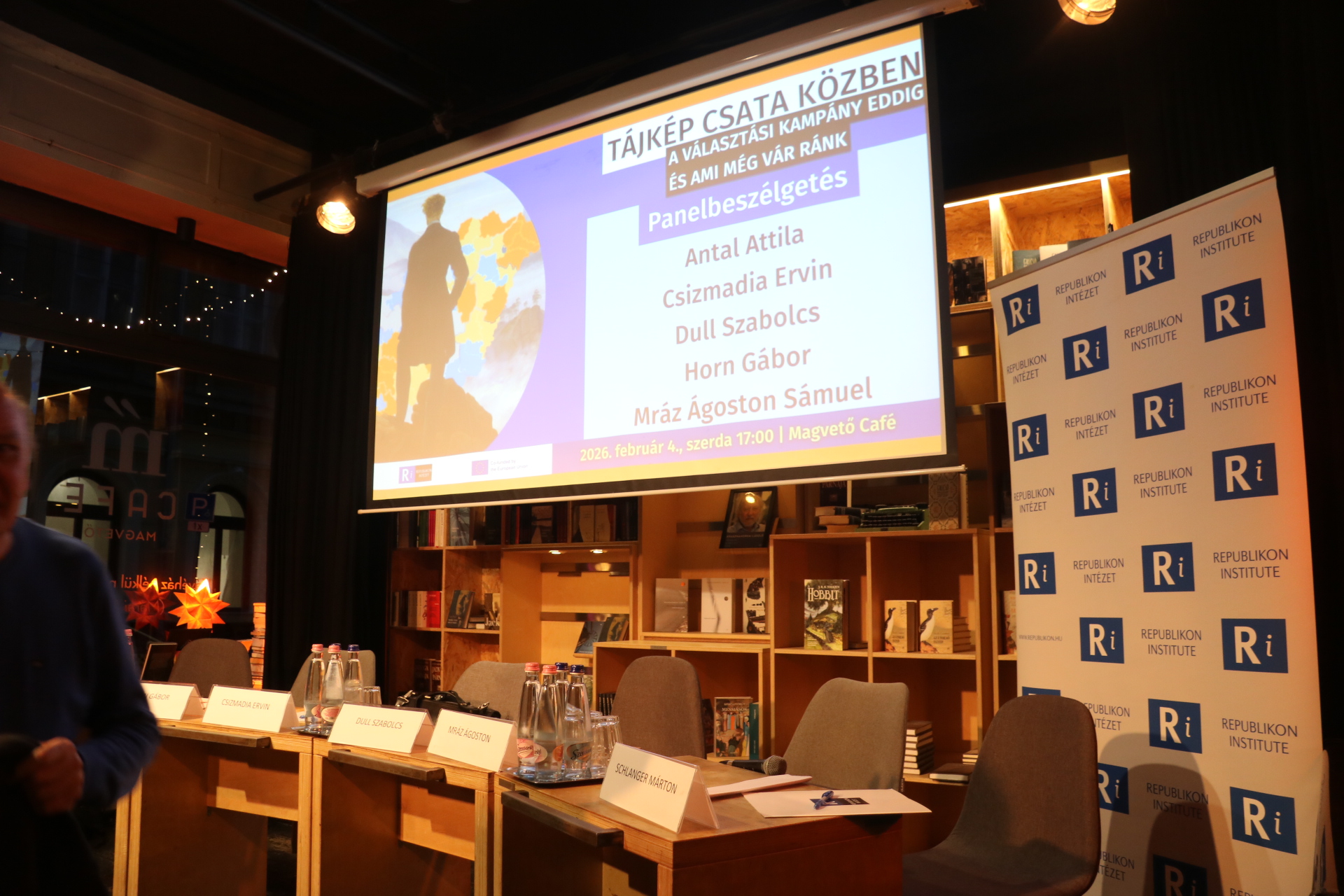
On February 4, 2026, the Republikon Institute held a conference entitled "Landscape in the Middle of Battle" where experts discussed the unique nature of the 2026 parliamentary election campaign so far, the main messages of the campaign, the role of smaller parties, and what to expect in the next three months.
Participants: Attila Antal, Ervin Csizmadia, Szabolcs Dull, Gábor Horn, Ágoston Mráz
Márton Schlanger, an analyst at Republikon, moderated the discussion.
Moderator Márton Schlanger initiated the discussion by highlighting the distinctive nature of the 2026 election campaign. He asked the experts to explain how this campaign differs from previous ones. Lawyer and political scientist Attila Antal noted that the campaign has intensified due to a stronger opposition challenger. He stated that the mobilization efforts demonstrate the lengths to which the current system will go to retain power. Antal emphasized that, even if Tisza wins, the prospect of a change in government exists, but achieving a regime change is a far more complex process. Gábor Horn, director of Republikon Institute, expressed that it feels as though the campaign has been ongoing for two years. He believes that politics is playing a more significant role in Hungarian society, and the increasing political content is heightening tensions among the populace. Horn added that the 2026 election will not function as a referendum but rather as a contest of mobilization. Success will depend on who can resonate with voters the most. He pointed out that research cannot accurately measure this, making the outcome in April difficult to predict. Ervin Csizmadia, director of the Méltányosság Intézet, commented that the opposition is stronger than it was in 2022 in three key ways: it has more coherent ideological representation, better organization in rural areas, and a leader with whom voters can more easily identify. This indicates more concentrated representation rather than a scattering of multiple opposition parties, and personality-driven competition has resurfaced. Journalist, analyst, and lawyer Szabolcs Dull pointed out that the primary issue of the campaign has not yet been determined. From the government’s perspective, it matters whether the election will come down to a choice between "Orbán or not Orbán" or "Orbán or Péter Magyar." The discussion concluded with Ágoston Mráz, head of the Nézőpont Institute, expressing uncertainty about whether Péter Magyar will be the prime ministerial candidate for Tisza, given his past ties to Fidesz, which may alienate some voters. Throughout the discussion, the question of whether Tisza is a protest party was raised. Szabolcs Dull agreed with this perspective, while Gábor Horn suggested that the hope for a different future unites Tisza voters more than mere opposition to the current government. Ervin Csizmadia added that while the opposition coalition formed in 2022 was viewed as a protest movement, the Tisza Party has learned from the government and has reinvigorated discussions of national issues that matter to the electorate.
The second question posed to the panelists concerned the main campaign messages of the two strongest parties, as well as new techniques being employed. According to moderator Márton Schlanger, Fidesz–KDNP's primary campaign message centers around the theme of war, while Tisza's message focuses on corruption. The panelists largely agreed with this characterization, emphasizing that these messages contribute to a larger, constructed image. Attila Antal pointed out that the stakes of the election involve the further strengthening of authoritarian systems, which voters will also be considering. From a technical perspective, he noted that the campaign has become more aggressive due to a decline in moral constraints and changes in social norms regarding what can be said about certain groups in Hungarian society. He highlighted the extensive use of influencers and social media as a new development in campaigning. Gábor Horn explained that, under the theme of war, Fidesz promises security to its voters. This is why they place great emphasis on Viktor Orbán's international network of contacts and on various measures aimed at securing livelihoods, such as reducing utility costs and introducing a 14th-month pension. In contrast, Tisza highlights the economic problems evident in everyday life and critiques the dysfunctionality of the current system, aiming to bring politics closer to the people and promising a more functional Hungary. Ágoston Mráz agreed that on the Fidesz side, experience, familiarity, and security compete with Tisza's promises. He added that he believes the former resonates more with voters in an uncertain, wartime situation, which benefits Fidesz. Szabolcs Dull suggested that the government is trying to steer the campaign toward security and international politics so that voters do not evaluate the Orbán government's performance and Hungary's current economic and social situation on election day. Ervin Csizmadia highlighted that Tisza has learned a lot from Fidesz's previous strategies that helped them gain power, reintroducing micro-politics into the campaign. According to Ágoston Mráz, the claim that Fidesz has abandoned micro-politics is incorrect, and he added that this strategy alone is insufficient to win an election.
The third topic of the panel discussion focused on the role of small parties and independent opposition candidates, as well as their strategies for success. Moderator Márton Schlanger asked the participants to share their thoughts on the potential impact of these players in the remainder of the campaign. Ágoston Mráz suggested that the presence of a third party in parliament could be significant for many voters, as it might provide a sense of security. He mentioned that parties like DK, MKKP, and Mi Hazánk could potentially gain seats. Conversely, Szabolcs Dull expressed skepticism about the smaller opposition parties’ ability to attract a substantial voter base, as they struggle to present convincing reasons for voters to select them over Tisza. He noted that Mi Hazánk, on the other hand, offers a clear third alternative for those hesitant to choose between Fidesz and Tisza. Attila Antal highlighted the distinction between a change of government and a change of regime, suggesting that it might be wise for smaller parties to consider withdrawing from the race. Finally, Ervin Csizmadia emphasized that winning the election represents just the first significant challenge for Tisza; the greater test will be remaining in power and effectively collaborating with other parties.
During the final question, moderator Márton Schlanger asked participants to consider what international events or influences might impact the remainder of the campaign, similar to how the outbreak of the Russian-Ukrainian war in 2022 did. Gábor Horn noted that Viktor Orbán has become a prominent symbol of the right-wing movement in recent years, making it beneficial for many influential figures for him to stay in power. However, he pointed out that the effect of this on the election is difficult to quantify. Szabolcs Dull concurred, stating that it's hard to assess how the government's diplomatic achievements will influence the election. In contrast, Ágoston Mráz suggested that the stability or uncertainty of the international situation on election day could affect how voters decide.
The final question of the event focused on potential international events and influences that could impact the upcoming campaign, similar to how the outbreak of the Russian-Ukrainian war in 2022 affected various situations. Gábor Horn noted that Viktor Orbán has emerged as a significant symbol of the right-wing movement in recent years, making it advantageous for many influential players for him to remain in power. However, assessing the effect this will have on the elections is challenging. Szabolcs Dull echoed this sentiment, stating that it is difficult to predict the influence of the government's diplomatic successes on the elections. Meanwhile, Sámuel Mráz argued that the state of the international situation—whether it is uncertain or stable—on election day could sway voters' decisions.
The operation of Republikon Institute is supported by the European Union. The views and opinions expressed at the event do not necessarily reflect that of the European Union. Neither the European Union, nor the organisation providing support can be made responsible for these.