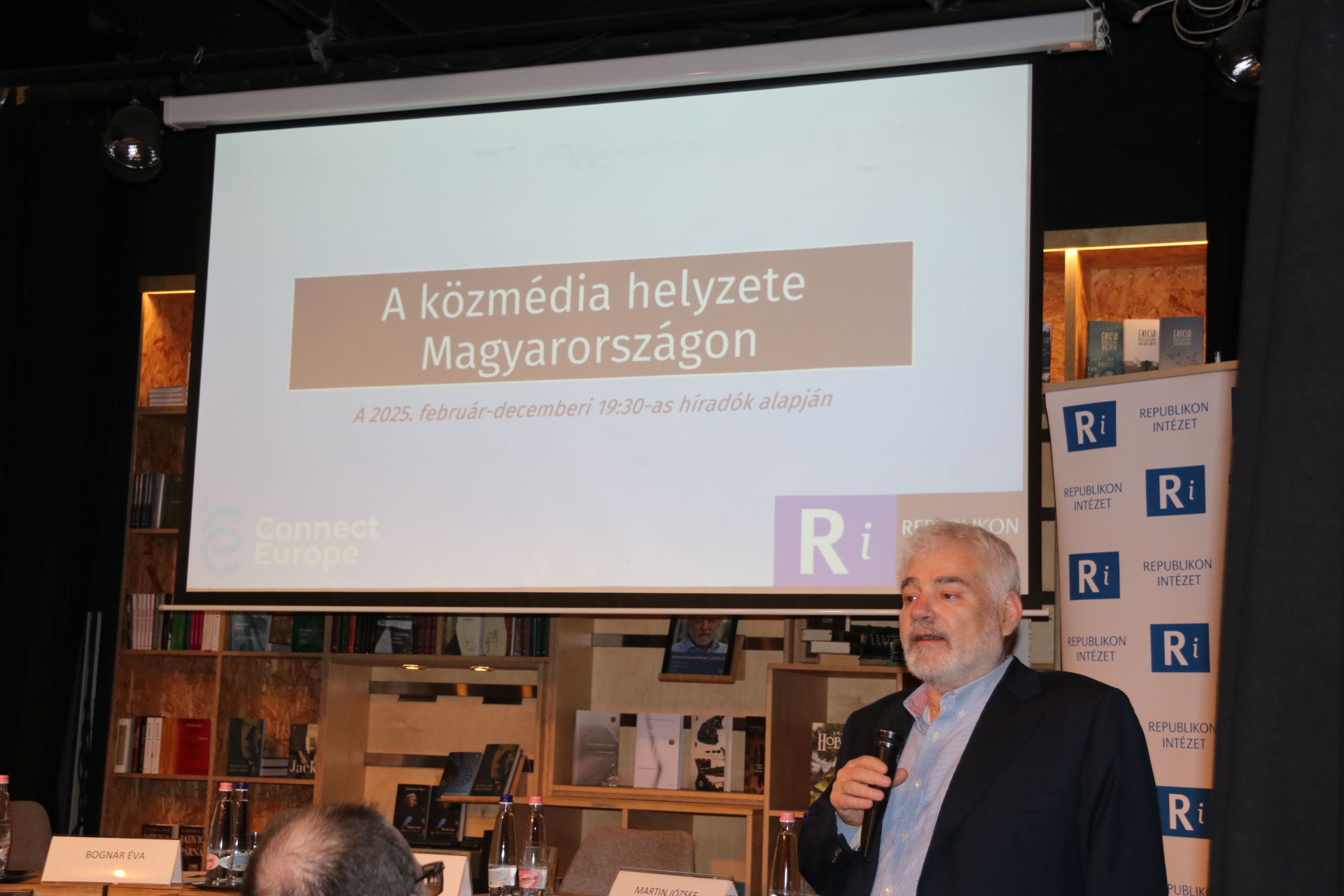
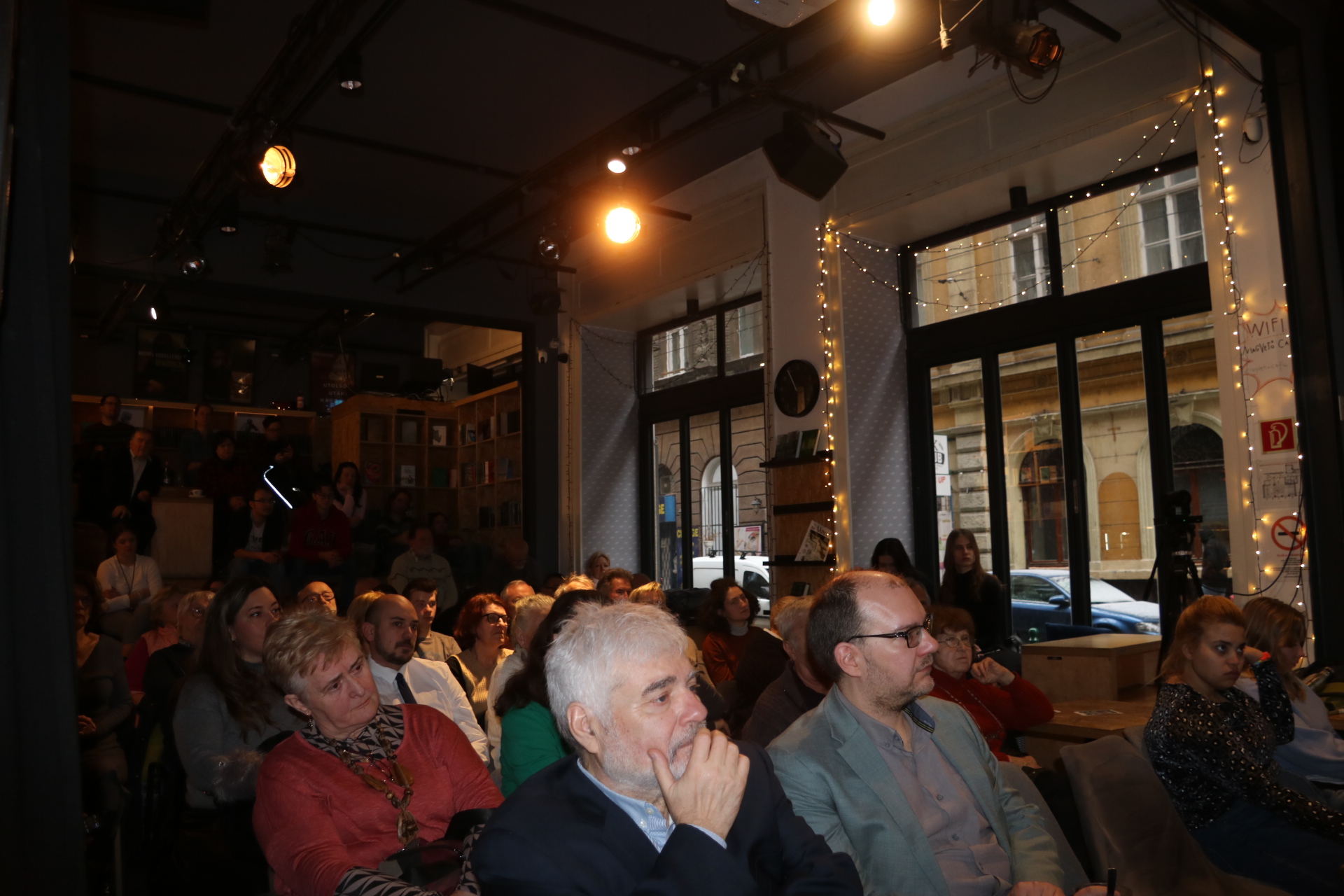
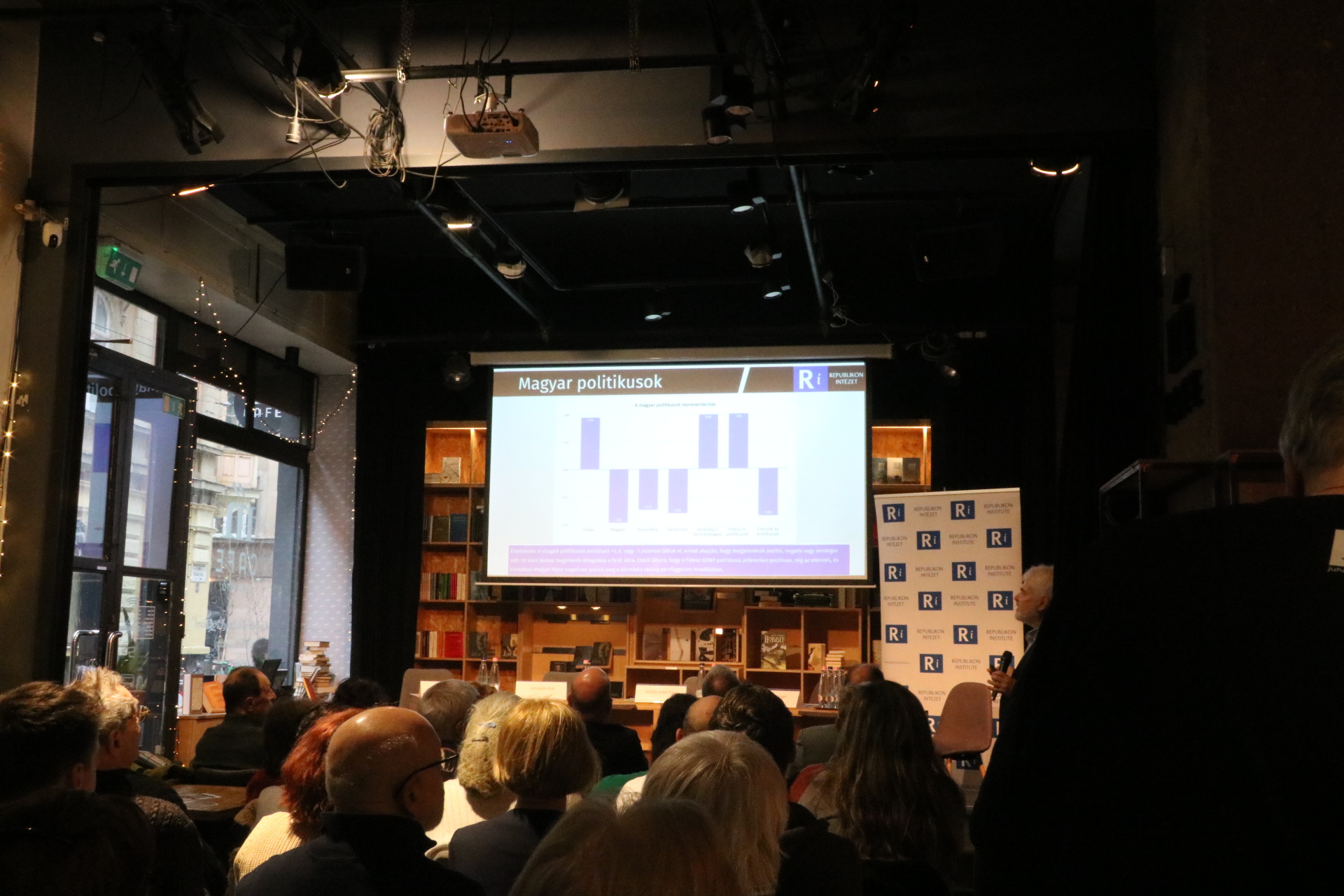
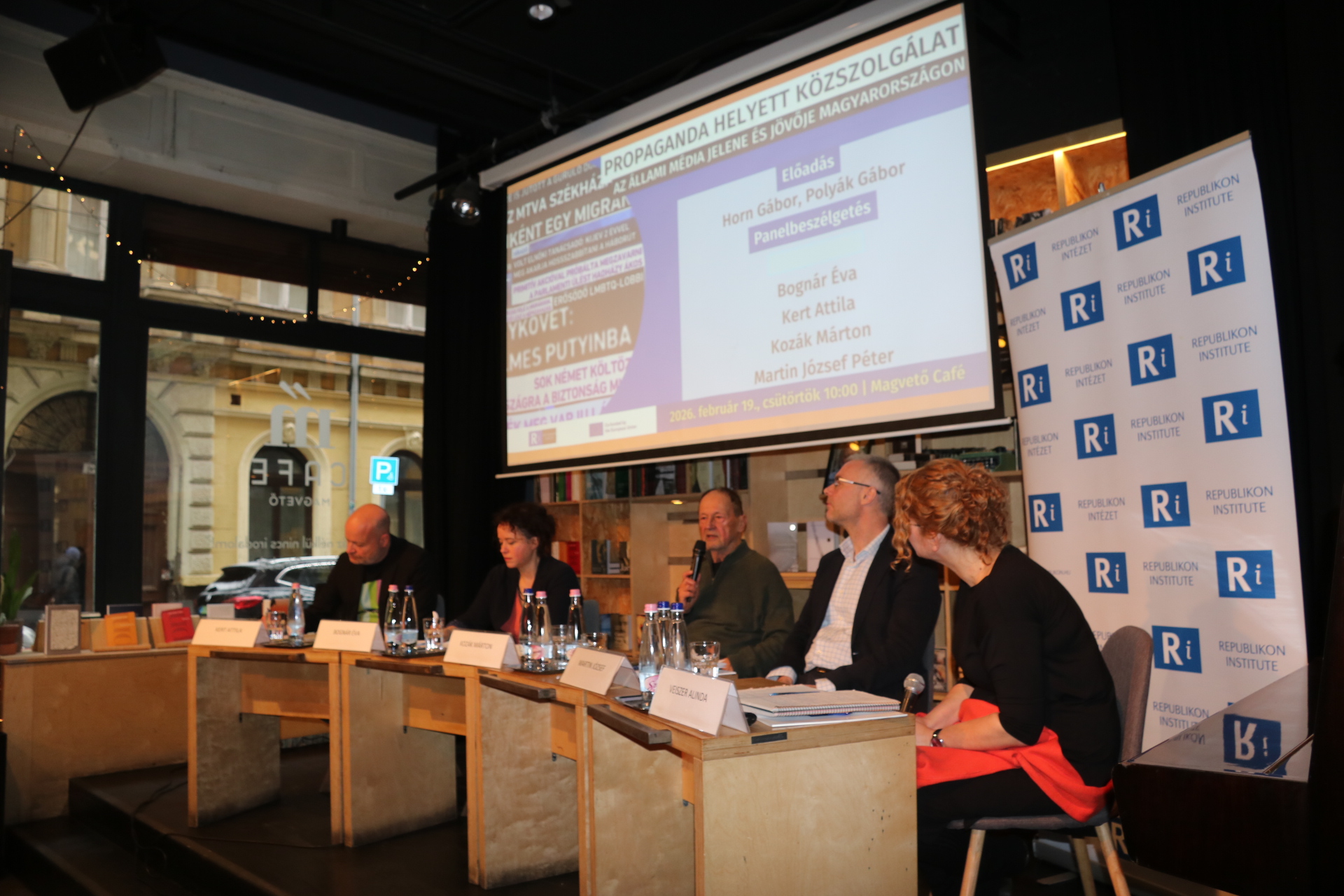
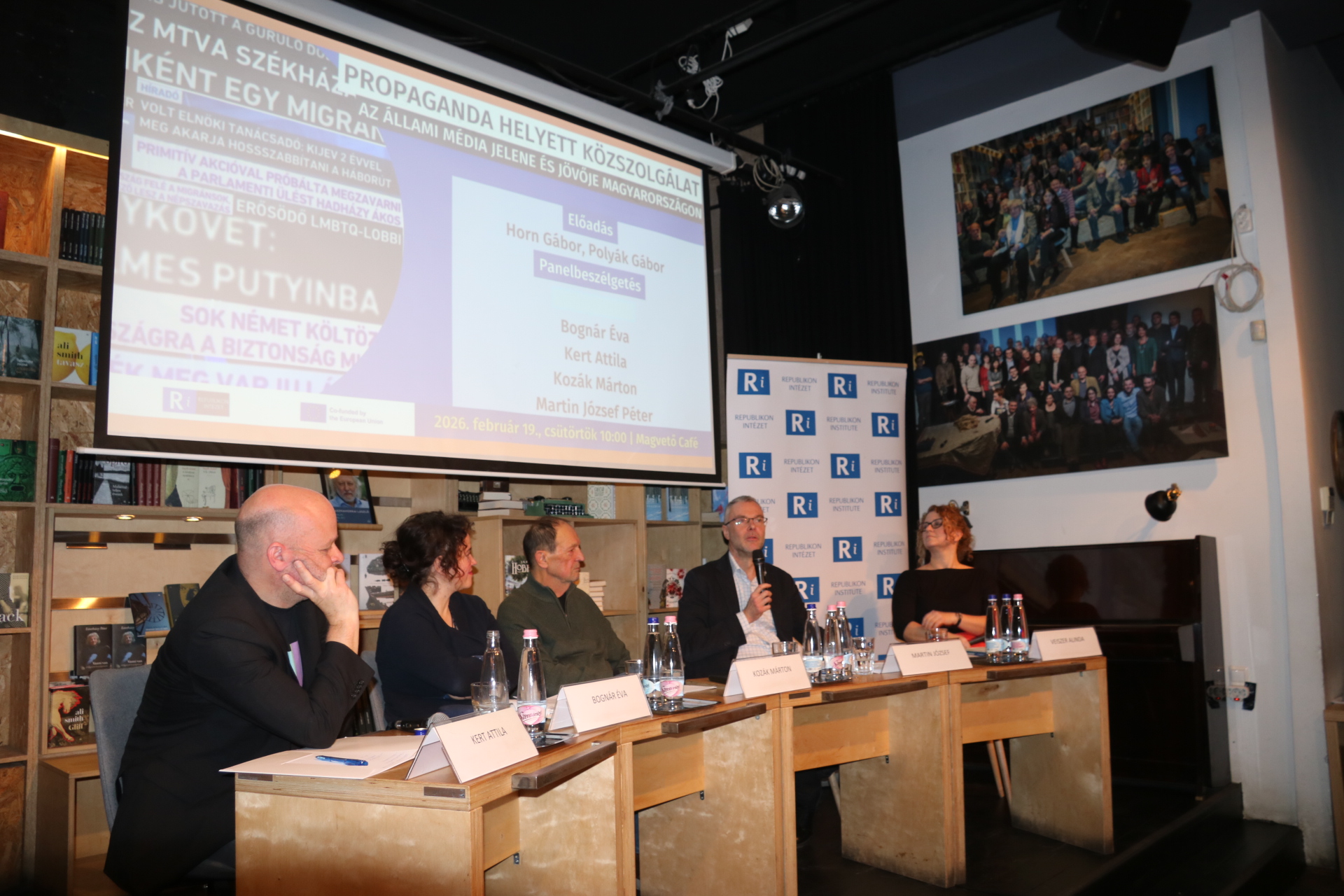
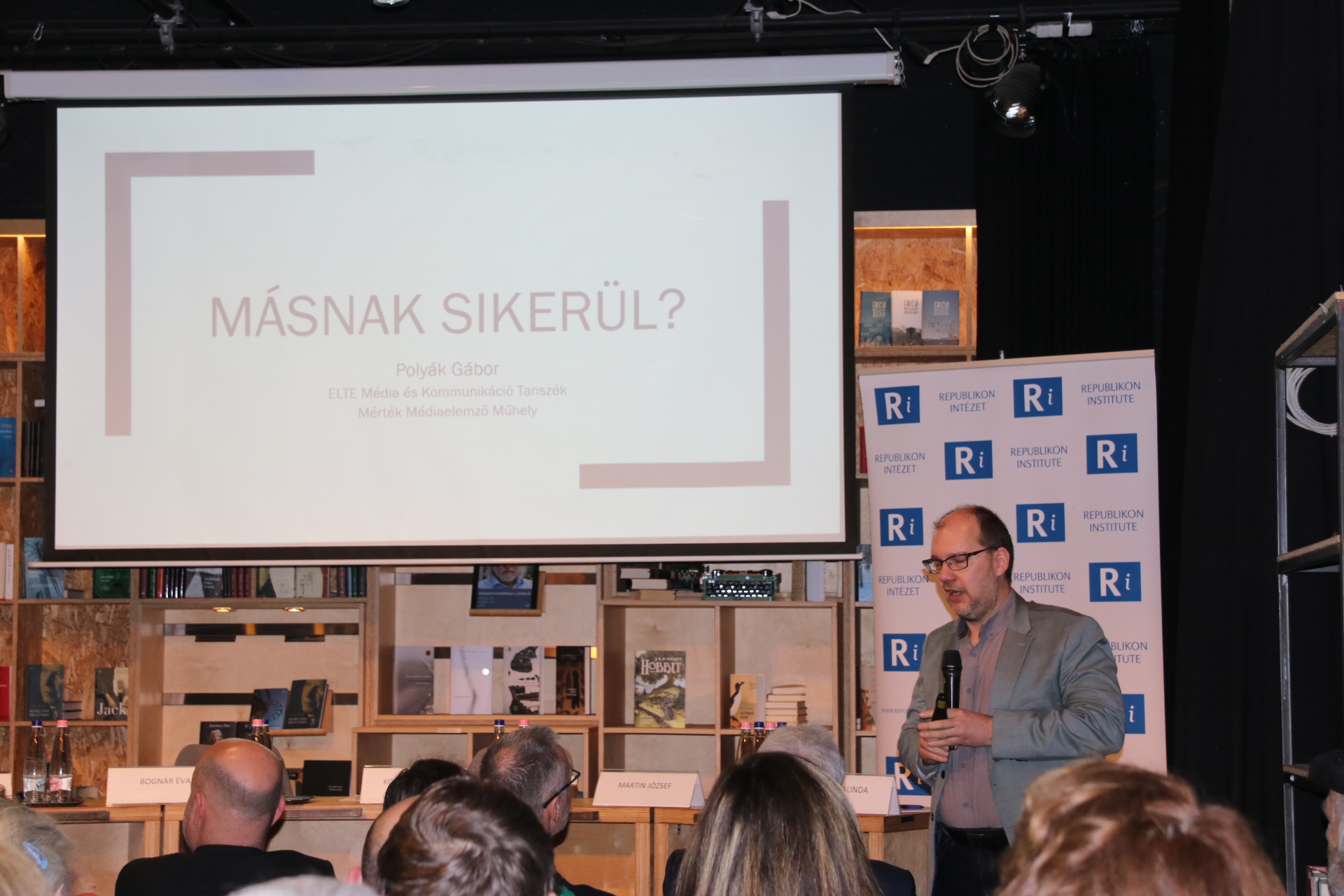
On February 19, 2026, the Republikon Institute held a conference entitled "Public service instead of propaganda" where experts discussed the current status of Hungarian media.
The conference started with presentations by Gábor Horn and Gábor Polyák, followed by a closing panel discussion. This discussion focused on whether public service media is necessary in Hungary and, if so, under what conditions it can effectively fulfill its democratic role. The participants reached a consensus that public media is an essential institution in theory; however, they acknowledged that the current state of Hungarian public media significantly deviates from this ideal.
Attila Kert argued that the need for genuine public media is greater than ever, especially in light of pressing issues like disinformation, sovereignty, and identity. He emphasized that the current state of Hungarian public media cannot be justified and should be abolished in its existing form. Instead of fulfilling its public service duties, it serves political interests and plays a significant role in the system of corruption.
Éva Bognár highlighted the democratic roles of public media, stating that it ideally fulfills functions that market-driven media either cannot or will not provide. These functions include ensuring universal access, offering cultural and minority content, maintaining archives, and training new journalists. However, she also pointed out that the relationship between public media and society presents a "chicken-and-egg" dilemma: lasting trust can only be established over time through operations that are free from political interference.
József Péter Martin emphasized the financial and corruption-related issues within public media. He noted that MTVA oversees a substantial amount of money, yet its operations lack transparency and are illegal in several ways. Martin provided specific examples demonstrating that the use of public funds does not benefit the public, but instead facilitates the organized misappropriation of these funds. Additionally, he pointed out that public media formally fails to meet its transparency obligations.
Márton Kozák criticized the operation of MTVA from both a historical and normative perspective. He noted that the original purpose of public service media was to promote free political competition, a goal that Hungarian public media does not achieve today. He emphasized that the media institution, as well as the media authority, fails to fulfill its supervisory role. He pointed out that, even in authoritarian systems, there has been greater political access to state media than exists in Hungary today.
To summarize the panel discussion, participants reached a consensus that the crisis in public media is not just a policy issue but a profound social problem. Addressing this crisis requires stable funding that is not vulnerable to political manipulation, enhanced transparency, and a restoration of social trust, even though this may be a long and uncertain journey.
The operation of Republikon Institute is supported by the European Union. The views and opinions expressed at the event do not necessarily reflect that of the European Union. Neither the European Union, nor the organisation providing support can be made responsible for these.