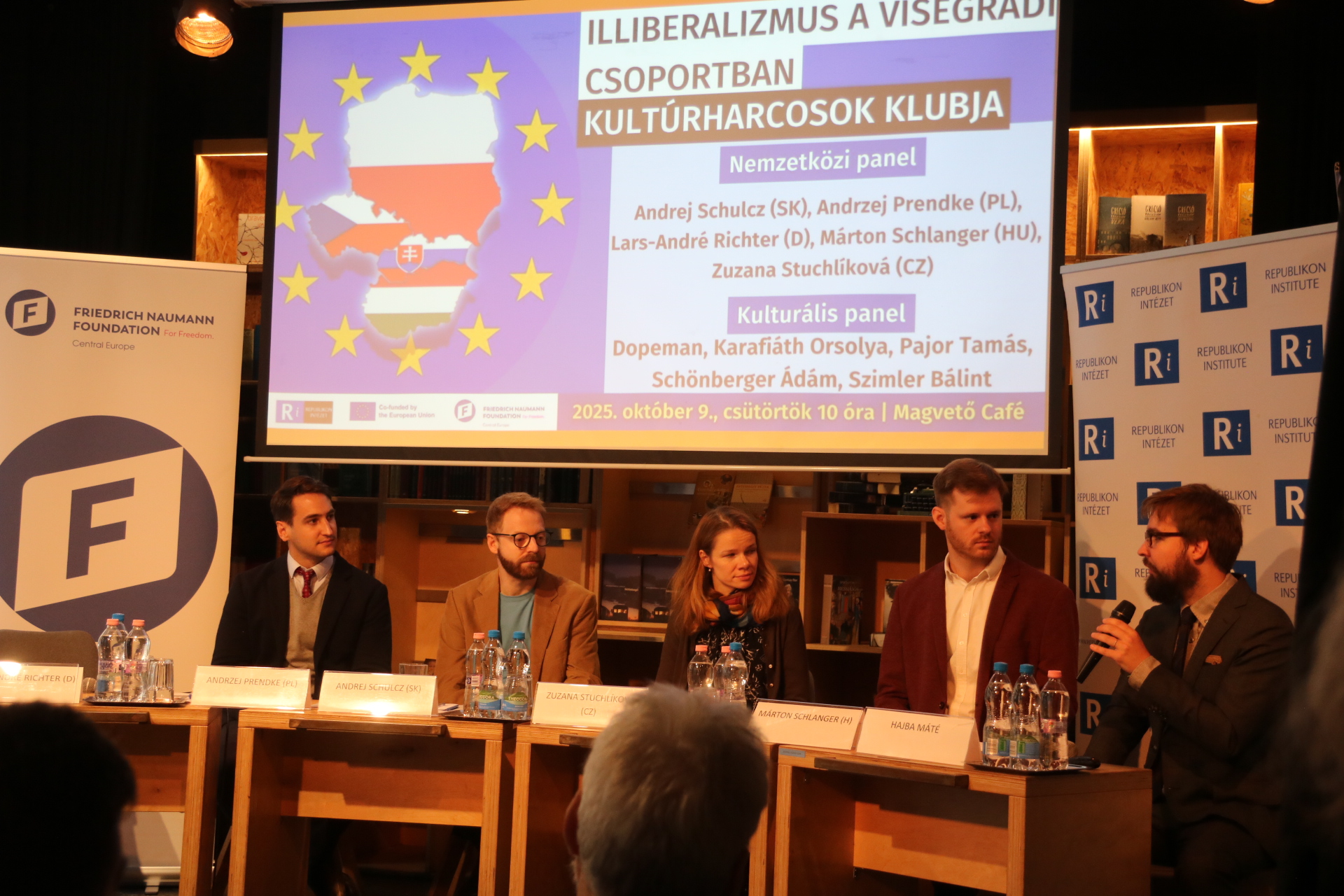
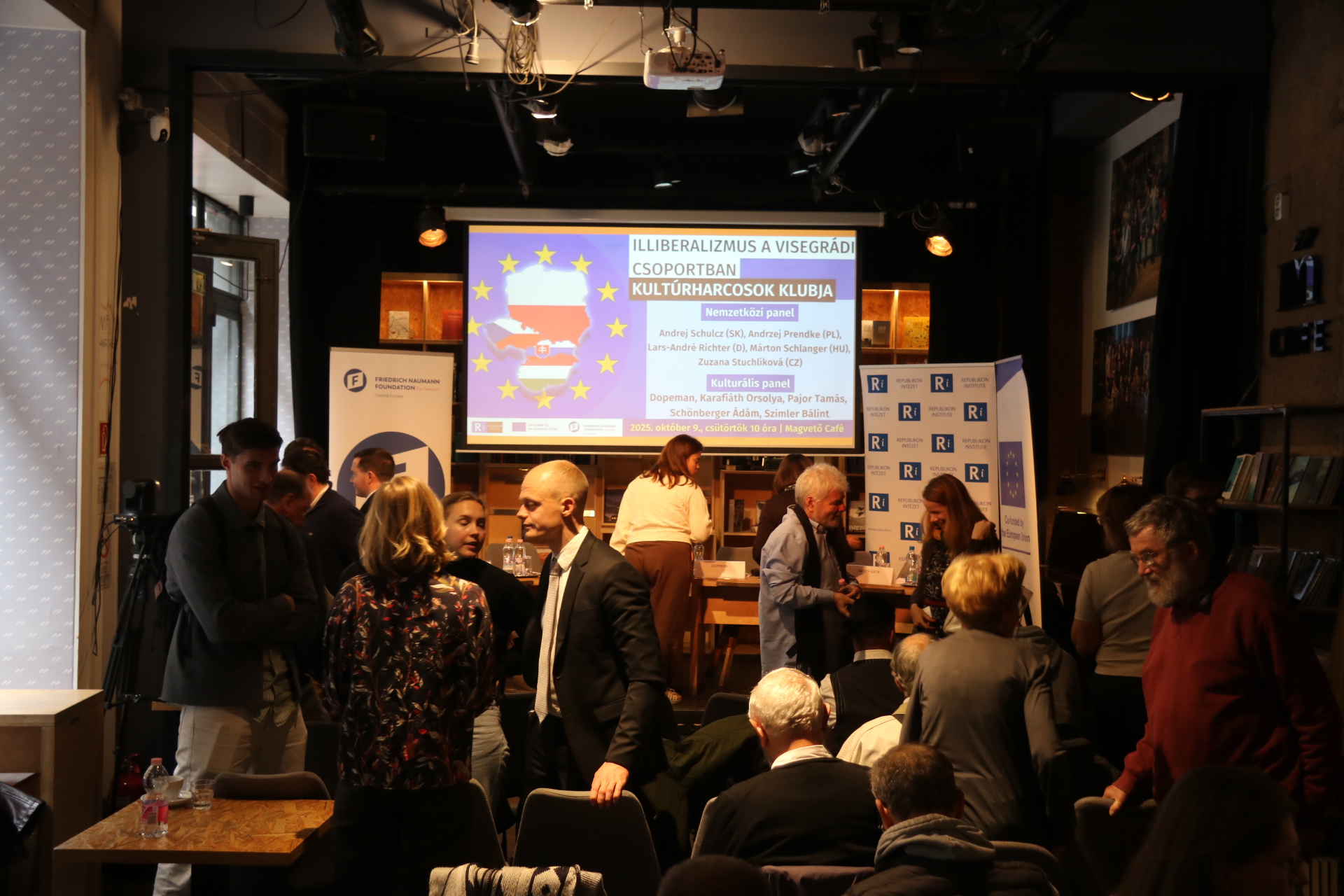
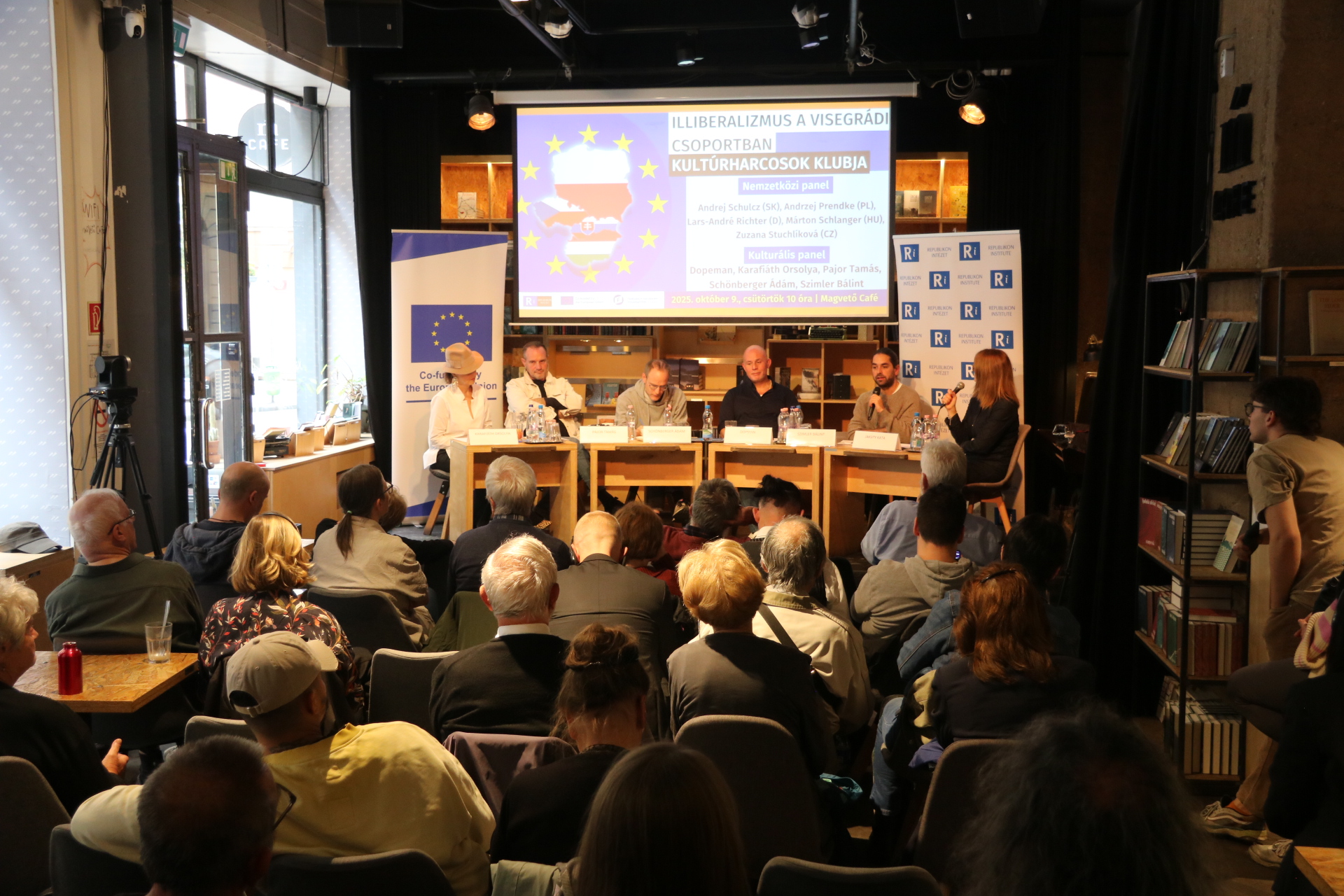
First panel: Illiberalism in the Visegrad Group
Participants: Andrej Schulcz (SK), Andrzej Prendke (PL), Lars-André Richter (D), Márton Schlanger (HU), Zuzana Stuchlíková (CZ)
The panel discussion focused on the emergence and impact of illiberalism in the V4 countries (Hungary, Poland, the Czech Republic, and Slovakia). The participants presented the current political situations in their respective countries and then discussed to what extent illiberal trends are strengthening in the region and how liberal forces can respond to them.
Zuzana Stuchlíková reported on the political situation in the Czech Republic. She spoke about the most recent Czech elections, highlighting the continuous six-month lead and victory of the ANO party led by Andrej Babiš. She explained that Babiš initially represented liberal values but later shifted toward a conservative, nationalist direction. During his campaign, he emphasized domestic issues as his top priority, paying little attention to foreign policy. Babiš is an important ally of Hungarian Prime Minister Viktor Orbán, and both are members of the “Patriots for Europe” political alliance in the European Parliament, although they disagree on several issues. According to Zuzana, negotiations on ministerial appointments are currently underway in the Czech Republic and progressing faster than expected. While Babiš represents illiberal values, democratic institutions in the country remain relatively strong, and political competition is still more pluralistic than in Hungary.
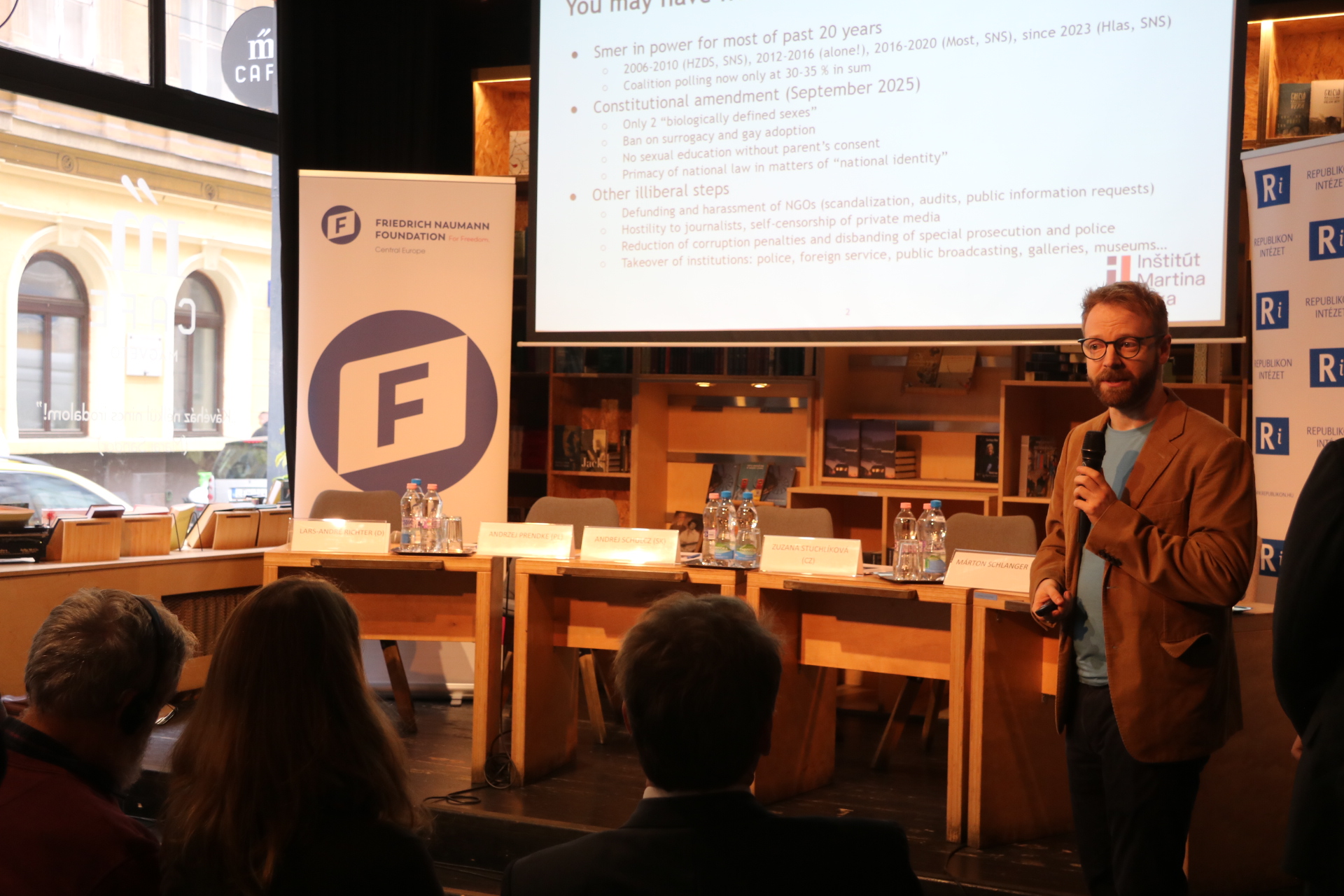
Andrej Schulcz gave an overview of the current political situation in Slovakia, emphasizing that the Smer party led by Robert Fico has been a dominant force for the past two decades and has introduced several illiberal measures—such as recognizing only two biological sexes, banning adoption by same-sex couples (and making adoption outside of marriage more difficult), targeting civil organizations, and amending the criminal code. However, power in Slovakia is less concentrated than in Hungary: coalition governments, internal party conflicts, and pressure from civil society restrain authoritarian tendencies. Fico is seen as more pragmatic than ideological; his politics are often driven by power interests rather than principles.
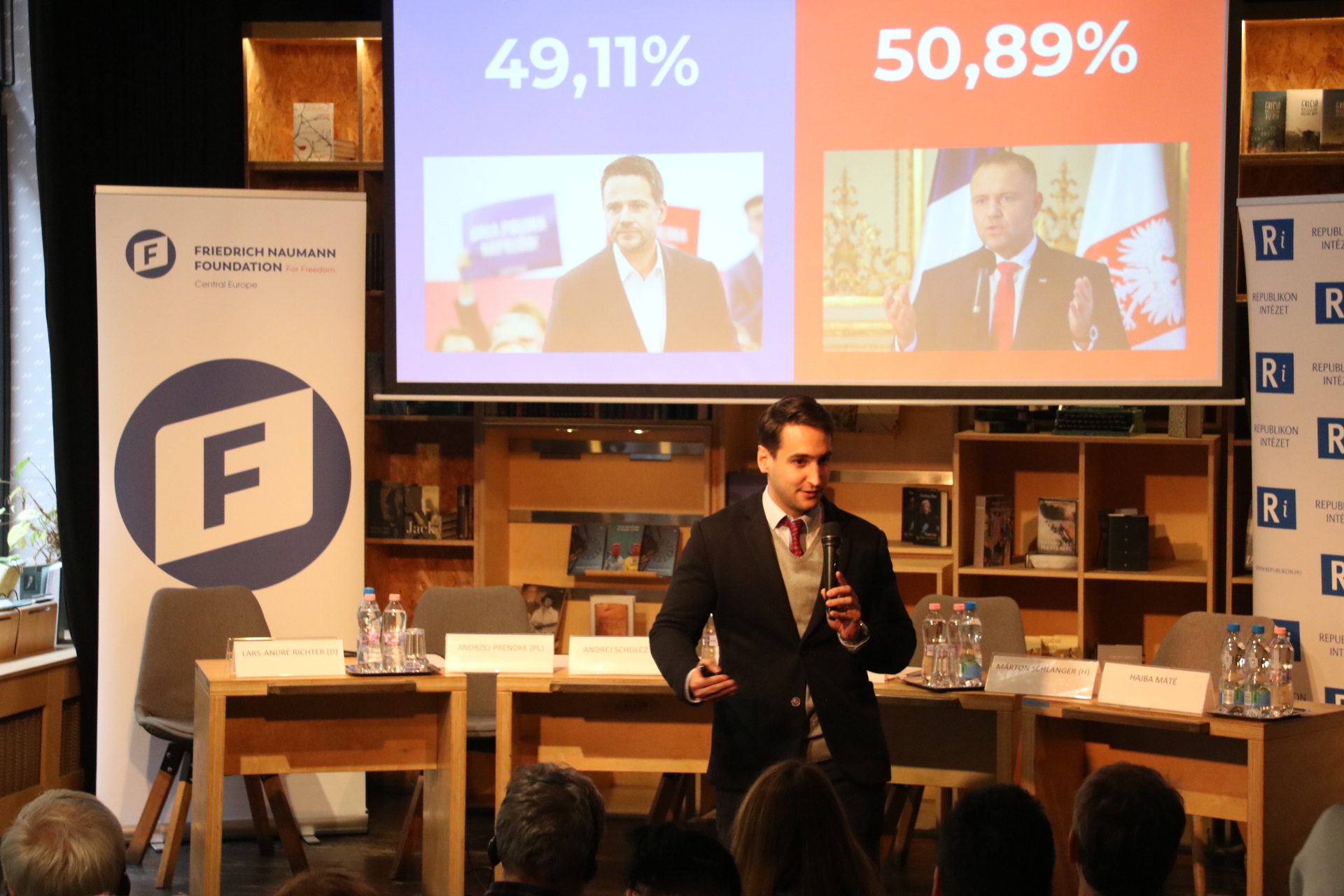
Andrzej Prendke discussed the recent presidential election in Poland, which showed strong polarization between conservative and liberal candidates. Voters are divided almost evenly between the two sides, which makes political stability difficult. Polish politics are deeply split on issues such as relations with the EU, the economy, and minority rights. Prendke argued that liberal parties have made mistakes by failing to clearly communicate their values and offer a compelling alternative to populism.
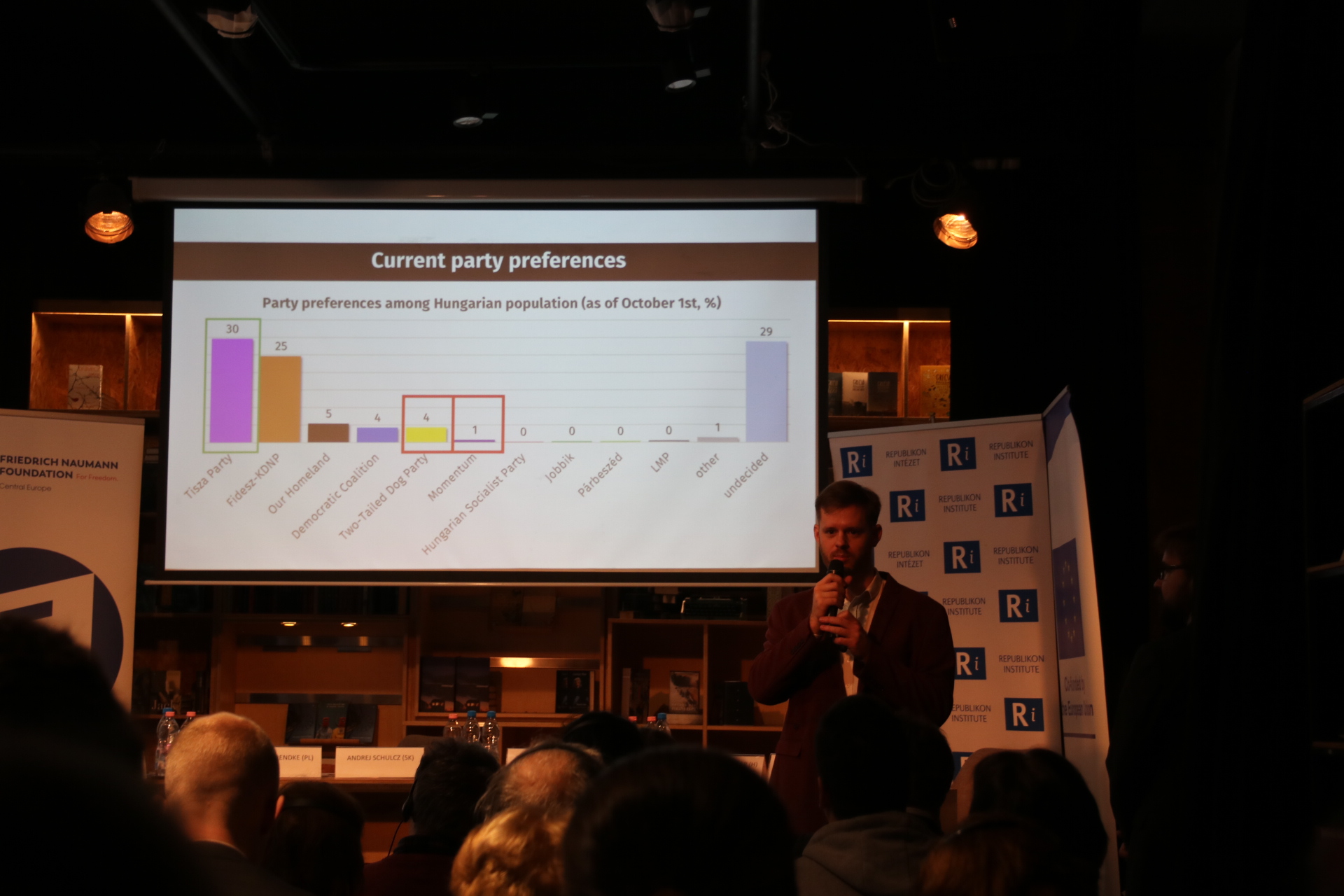
Márton Schlanger described Hungary as the textbook example of illiberalism, a label openly embraced by Viktor Orbán himself. The lack of independent media, the weakening of democratic institutions, and restrictions on civil society all define the current system. According to polls, the Tisza Party is leading ahead of the upcoming elections, but it remains uncertain whether a potential victory would steer the country in a more liberal direction. Based on surveys, the only parties with realistic chances of entering parliament are Fidesz–KDNP, Tisza, and Mi Hazánk. Schlanger considers three Hungarian parties to be liberal: Tisza, the Hungarian Two-Tailed Dog Party (MKKP), and Momentum—although the latter has stepped back in favor of Tisza for the 2026 elections. One of the main topics of debate is progressive taxation, which Fidesz has used as a propaganda weapon against Tisza.
During the discussion, all participants agreed that the illiberal turns in the V4 countries mutually influence one another. Viktor Orbán’s political model has inspired Fico, with Orbán often positioning himself as the “teacher” and Fico as the “student.” The Czech Republic and Slovakia, however, represent a more pragmatic approach. The participants noted that the V4 countries share similar historical experiences and a common aspiration to “catch up” with Western Europe, but their political trajectories have shifted rightward to varying degrees.
Lars-André Richter, director of the Friedrich Naumann Foundation, said that the modern political spectrum – left, center, and right – emerged in the 19th century, and after World War II, Western Europe sought to build a bridge between conservatives and liberals. After the fall of communism, the post-communist countries aimed to follow Western models, and Western parties helped politicians from the Eastern Bloc to found parties, including Viktor Orbán. Richter emphasized that traditional party systems are now weakening, while populism is becoming increasingly prevalent worldwide as a political style and tactic. He mentioned that illiberal populists are destroying the most important achievements of the past centuries—independent justice, the press, and academic life. Populism threatens the 200-year legacy of enlightenment and liberalism, and although it manifests itself in different forms in different countries, it is similarly destructive, he warned.
In the second half of the conversation, the panel debated whether liberalism is the right response to the challenges of illiberalism. Several participants stressed that liberal politics must redefine itself and focus on practical issues—such as cost of living and housing—rather than purely ideological debates.
According to the participants, the worst-case scenario would be if Orbán, Fico, and Babiš all remained in power, leading to the emergence of an illiberal V4 bloc. The best-case scenario would be a change of government in Hungary, which could strengthen liberal tendencies and restore balance within the V4. The conclusion was that liberalism has not lost its relevance but must take on a renewed form to effectively counter populist and authoritarian trends.
Second panel: Cultural fight club
Participants: Dopeman (László Pityinger), Orsolya Karafiáth, Tamás Pajor, Ádám Schönberger, Bálint Szimler
In Hungary, the situation is far from ideal. The freedom of culture is being stifled by financial dependence, and anyone who engages in political expression risks their reputation and career. As the parliamentary elections draw nearer and the stakes rise day by day, figures in the cultural sphere are becoming increasingly politically active. At the Kultúrharcosok Klubja (“Culture Warriors Club”) panel, participants discussed whether artists and public figures have a responsibility to speak out on public issues, what risks they face when doing so, and how the national system of cultural funding operates.
According to Orsolya Karafiáth, an artist’s foremost responsibility is to create the best work they can. She believes that artists must speak about their own world, and politics and public life are naturally a part of that world. In her view, anyone who claims “I’m just an artist, I don’t deal with politics” can no longer be regarded as a true artist. Karafiáth thus sees social and political reflection as an inherent part of the artistic role. She also emphasized the need for state support in culture—especially in literature and theatre—since artists cannot freely experiment or innovate under purely market-based conditions.
Tamás Pajor took a more permissive stance compared to Karafiáth, arguing that the artistic and public roles depend largely on personal temperament, and not every artist needs to engage in political discourse. However, he agreed that involvement in public affairs is ultimately unavoidable, since politics affects everyone. Regarding the Hungarian context, Pajor believes that the current government displays a spirit of revenge towards contemporary artists and practices a kind of politics of retribution, which often backfires. A notable example, he said, was the case of the University of Theatre and Film Arts (SZFE). Pajor and Dopeman both agreed that the Hungarian art scene is too small to sustain so much talent through market forces alone. For this reason, Pajor advocates for a mixed system of public and private patronage, which, in his view, could ensure fairness and equal opportunity for artists through a more just distribution of funds.
Ádám Schönberger raised the question of why people today even have to hesitate over whether to speak up or not. He suggested that the real issue is why communication itself has become so limited. Many people, he argued, refrain from speaking because they were never taught proper expression and fear the consequences of voicing their views. In the eyes of those in power, expressing an opinion often seems like forcing something down others’ throats, which leads people to shout louder and make more categorical statements just to be heard. Schönberger also highlighted the absence of a “middle sphere” in Hungary—structures such as unions or civic organizations that could mediate between individuals and the state. He believes this situation could only change if the state were willing to cooperate, and stressed that freedom does not come from the state but from collective action and solidarity among people.
Dopeman (László Pityinger) argued that artists do have a social and public responsibility, but such involvement rarely produces true artistic works. In his view, art is a mirror—it reflects both the artist and the world they experience. Genuine art, he said, is universal, and when an artist becomes trapped in day-to-day political issues, their artistic power fades, leaving only fleeting topical stories. He believes artists should challenge boundaries—especially those imposed by power—but must also accept criticism in return. Dopeman repeatedly emphasized that Hungary operates on a system of patronage rather than a real market, due to its limited audience. He argued that when the government interferes with culture, it inevitably provokes resistance, since pressure always generates criticism. He also stated that there is freedom and democracy in Hungary—if there weren’t, artists could not be openly critical. Finally, he noted that money can suffocate art, and that not every artist needs to make a living from their work; those who wish to remain free must accept uncertainty and the risks inherent in creation.
Bálint Szimler consistently advocates for freedom of expression and artistic freedom, believing that the true judges of art are the audience themselves. He views art as something that must be innovative, constantly questioning and confronting the social problems we live with. In Hungary, he argued, artistic control is no longer exercised through direct censorship, but rather through funding—financial mechanisms determine who can create and who is pushed to the margins. He pointed out that while one side can produce films with billions of forints, the other operates at the periphery. For Szimler, art is truly engaging and valuable only when it is diverse and manifests in many different forms. He criticized the current decision-making system, where political loyalty often outweighs professional merit, resulting in an unfair distribution of resources. Szimler stressed that a fairer, talent-based allocation of cultural funding is crucial—not only for artists themselves but also for audiences, who benefit from a wider variety of artistic voices and perspectives.

The event was supported by the Friedrich Naumann Foundation.